
The Loop Maximalists: How AI is Creating a New Era of Personalized Music Consumption
Music
Nov 17
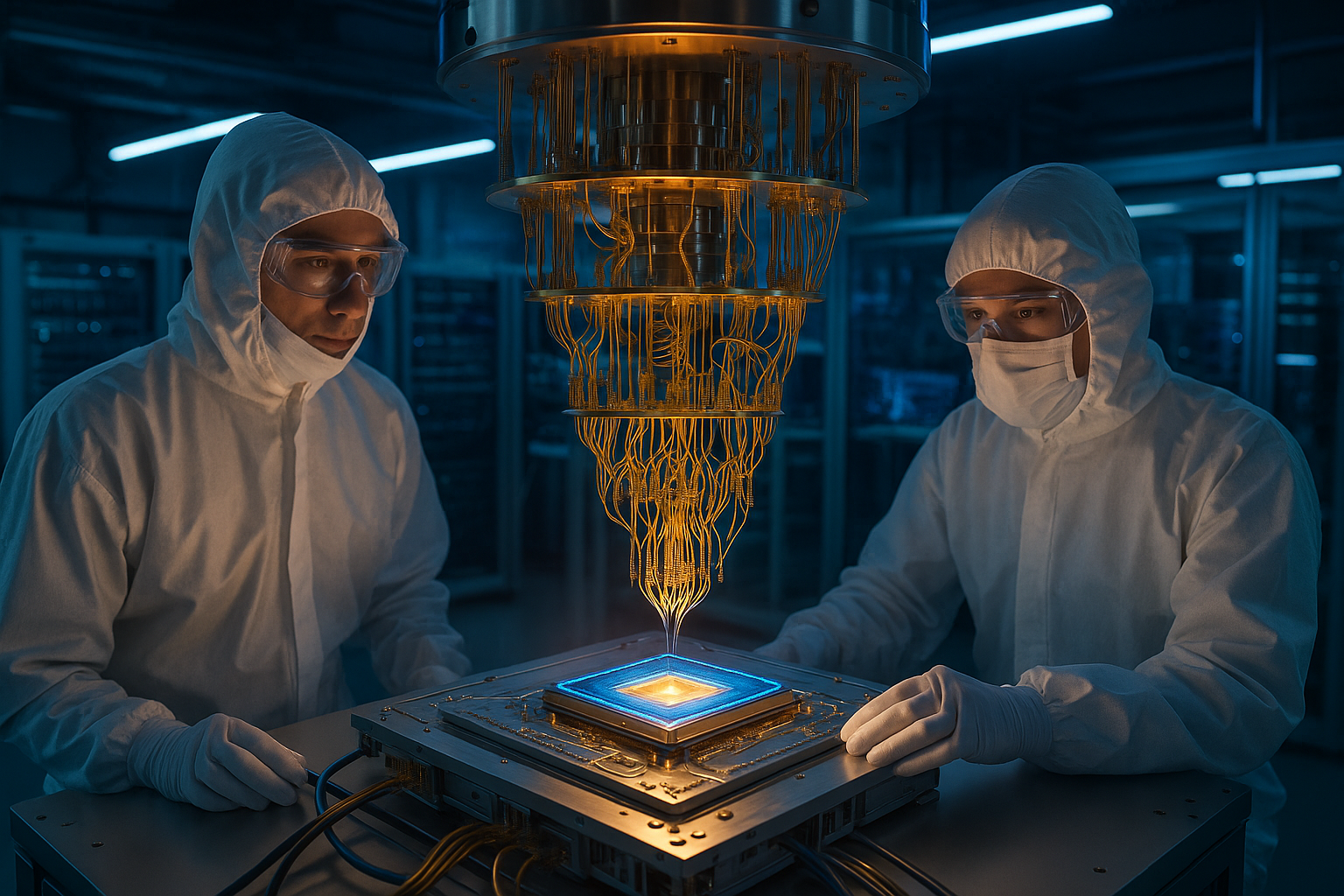
Classical computing, grounded in binary bits representing either 0 or 1, has powered technological advancements for decades. However, as computational problems grow in complexity, particularly in cryptography, optimization, and materials science, classical architectures encounter fundamental limitations. The exponential growth of computational resources needed to simulate quantum systems or factor large integers surpasses classical feasibility. Quantum computing offers a paradigm shift by leveraging quantum mechanical principles such as superposition, entanglement, quantum tunneling, and decoherence.
Superposition allows quantum bits, or qubits, to exist simultaneously in multiple states, enabling parallelism that classical bits cannot achieve. Entanglement, a phenomenon first rigorously analyzed by Einstein, Podolsky, and Rosen (1935) and formalized in quantum information theory, permits nonlocal correlations between qubits, exponentially expanding computational capacity. Quantum tunneling underpins certain qubit operations by allowing particles to traverse energy barriers, facilitating state transitions impervious to classical analogues. However, decoherence—the loss of quantum coherence due to environmental interactions—remains a principal challenge, as it causes qubits to lose their quantum information, limiting computation times.
The theoretical foundations of quantum algorithms were notably advanced by Peter Shor in 1994, who introduced Shor's algorithm for integer factorization, demonstrating that a quantum computer could factor large numbers exponentially faster than classical algorithms, threatening RSA cryptography (Shor, 1994). John Preskill later coined the term quantum supremacy to describe a quantum device's ability to perform a task beyond the reach of classical supercomputers (Preskill, 2012). These principles and milestones set the stage for experimental breakthroughs and the ongoing race toward scalable quantum machines.
In October 2019, Google AI Quantum announced a landmark achievement with its Sycamore processor, a 53-qubit superconducting quantum chip designed to perform a specific computational task—random circuit sampling—demonstrating quantum supremacy (Arute et al., 2019). This task, while not of immediate practical utility, was chosen because it is intractable for classical supercomputers. Google reported that Sycamore completed the sampling in approximately 200 seconds, whereas the world's most powerful classical supercomputers would require an estimated 10,000 years to perform the same task, marking an unprecedented computational advantage.
Sycamore's architecture leverages superconducting transmon qubits arranged in a two-dimensional lattice with nearest-neighbor coupling, enabling high-fidelity two-qubit gate operations essential for complex entanglement. The breakthrough was not only in qubit count but also in gate fidelity and error rates, with single-qubit gate fidelities exceeding 99.9% and two-qubit gates above 99%. However, the experiment also highlighted the limitations of current quantum hardware, especially regarding reproducibility and general-purpose applications.
The Google announcement sparked debate, notably from IBM researchers who argued that classical simulation times were overestimated and that classical computers could simulate Sycamore's circuits in days rather than millennia (Pednault et al., 2019). Nevertheless, the Sycamore experiment remains a pivotal moment demonstrating that quantum devices can outperform classical counterparts in specialized tasks, marking the transition from theoretical promise to empirical demonstration.
IBM has been at the forefront of superconducting qubit technology, emphasizing a scalable and modular approach. In 2021, IBM unveiled the Eagle processor, boasting 127 qubits with improved coherence times and gate fidelities (IBM Quantum, 2021). Building on this, IBM announced the Osprey chip, featuring 433 qubits, aiming to push quantum volume—a composite metric of qubit count, connectivity, and error rates—substantially higher.
IBM's quantum roadmap ambitiously targets a processor with over 4,000 qubits by the mid-2020s, integrating innovations such as cryogenic classical control electronics to reduce latency and power dissipation. The company envisions a layered architecture incorporating error correction codes, primarily the surface code, which demands thousands of physical qubits to encode a single logical qubit with fault tolerance (Fowler et al., 2012). IBM's superconducting qubits operate at millikelvin temperatures, requiring dilution refrigerators cooled near -273°C, to maintain coherence and suppress thermal noise.
IBM's open-access quantum cloud platform and its commitment to hybrid quantum-classical algorithms underscore a pragmatic approach, acknowledging that near-term devices, situated in the Noisy Intermediate-Scale Quantum (NISQ) era, cannot yet deliver fault-tolerant universal quantum computing but can explore algorithmic innovations and error mitigation strategies.
Contrasting with superconducting circuits, IonQ employs trapped-ion technology, utilizing individual ions confined in electromagnetic fields as qubits. These qubits benefit from inherently identical atomic properties, leading to exceptionally long coherence times and high-fidelity gate operations. IonQ reports qubit fidelities surpassing 99.9% and leverages an algorithmic qubit metric that accounts for both physical qubit count and gate fidelities to estimate effective computational power (Monroe & Kim, 2013).
Trapped-ion qubits are manipulated using precisely tuned laser pulses, enabling multi-qubit entanglement with all-to-all connectivity, a distinct advantage over fixed nearest-neighbor coupling in superconducting systems. However, challenges include slower gate speeds compared to superconducting qubits and engineering complexity in scaling ion traps while maintaining coherence and control.
IonQ's commercially available quantum cloud services indicate the practical viability of trapped-ion systems, although scalability to thousands of qubits remains under active research. The juxtaposition of IonQ's approach with superconducting platforms exemplifies the diversity of physical implementations striving toward universal quantum computation.
Quantum computing's potential applications span multiple domains, with profound implications. In drug discovery, quantum simulators promise enhanced modeling of molecular interactions and protein folding, a computationally intensive task classical supercomputers struggle with. Quantum algorithms tailored for chemistry, such as the Variational Quantum Eigensolver (VQE), aim to approximate ground-state energies of complex molecules, accelerating the identification of novel pharmaceuticals (McArdle et al., 2020).
In cryptography, Shor's algorithm theoretically undermines widely deployed RSA and ECC systems by efficiently factoring large integers and computing discrete logarithms, respectively. While current quantum devices are insufficient to threaten real-world cryptographic keys (e.g., 2048-bit RSA), the looming advent of fault-tolerant quantum computers necessitates the development of post-quantum cryptographic standards (NIST, 2016-2022).
Quantum algorithms also target optimization problems, ubiquitous in logistics, finance, and machine learning. Quantum Approximate Optimization Algorithm (QAOA) and Quantum Annealing (exemplified by D-Wave systems) seek to exploit quantum tunneling and entanglement to escape local minima and identify global optima more efficiently than classical heuristics, although empirical advantages remain under scrutiny.
Despite rapid progress, quantum computing faces formidable technical hurdles. Qubits are inherently fragile; environmental interactions induce decoherence, collapsing superpositions and entanglement, thereby corrupting quantum information. Present coherence times range from microseconds in superconducting qubits to seconds or minutes in trapped ions, yet these durations are insufficient for complex algorithms requiring thousands of sequential gates.
Error rates, often quantified by gate infidelities, necessitate robust quantum error correction protocols. The surface code, a leading candidate, demands substantial overhead, with estimates indicating the need for thousands of physical qubits per logical qubit (Fowler et al., 2012). Implementing error correction also requires fast, low-latency classical feedback systems integrated at cryogenic temperatures (~10-20 millikelvin), posing significant engineering challenges.
Cryogenic cooling, typically achieved via dilution refrigerators operating near absolute zero (-273.15°C), is essential to suppress thermal noise and sustain superconductivity. These systems are complex, costly, and limit qubit connectivity and integration density. Consequently, scaling quantum processors while maintaining low error rates and manageable infrastructure remains a critical bottleneck.
The field currently resides in the NISQ era (Noisy Intermediate-Scale Quantum), characterized by devices with tens to low hundreds of qubits lacking full error correction. While NISQ devices enable exploration of hybrid algorithms and problem-specific quantum advantage, their utility for broad, fault-tolerant applications remains limited (Preskill, 2018).
Industry roadmaps from IBM, Google, IonQ, and others project scalable, fault-tolerant quantum computers with thousands of logical qubits emerging in the 2030s. Achieving this milestone depends on breakthroughs in qubit coherence, gate fidelity, error correction, and system integration. Concurrently, algorithmic and software advances are needed to translate hardware capabilities into practical solutions.
In summary, quantum computing stands at the cusp of transformative potential, validated by empirical demonstrations such as Google's Sycamore and IBM's expanding qubit arrays. However, translating quantum supremacy into universal, fault-tolerant quantum computing remains a grand challenge demanding sustained interdisciplinary efforts over the next decade and beyond.
References:
Arute, F., et al. (2019). Quantum supremacy using a programmable superconducting processor. Nature, 574(7779), 505–510.
Fowler, A. G., Mariantoni, M., Martinis, J. M., & Cleland, A. N. (2012). Surface codes: Towards practical large-scale quantum computation. Physical Review A, 86(3), 032324.
IBM Quantum (2021). IBM Unveils 127-Qubit ‘Eagle’ Quantum Processor. IBM Research Blog.
McArdle, S., Endo, S., Aspuru-Guzik, A., Benjamin, S. C., & Yuan, X. (2020). Quantum computational chemistry. Reviews of Modern Physics, 92(1), 015003.
Monroe, C., & Kim, J. (2013). Scaling the ion trap quantum processor. Science, 339(6124), 1164–1169.
NIST Post-Quantum Cryptography Standardization (2016-2022). National Institute of Standards and Technology.
Pednault, E., Gunnels, J. A., Maslov, D., & Gambetta, J. M. (2019). Leveraging secondary storage to simulate deep 54-qubit Sycamore circuits. arXiv preprint arXiv:1910.09534.
Preskill, J. (2012). Quantum computing and the entanglement frontier. arXiv preprint arXiv:1203.5813.
Preskill, J. (2018). Quantum Computing in the NISQ era and beyond. Quantum, 2, 79.
Shor, P. W. (1994). Algorithms for quantum computation: discrete logarithms and factoring. In Proceedings 35th Annual Symposium on Foundations of Computer Science (pp. 124–134).

