Information Geometry Trade - December 27, 2025
Daily update on the Information Geometry investment thesis. Slight weakness with the portfolio declining 0.09%. GOOGL led with a +0.14% move, while AAPL lagged ...
Tech
Jan 6
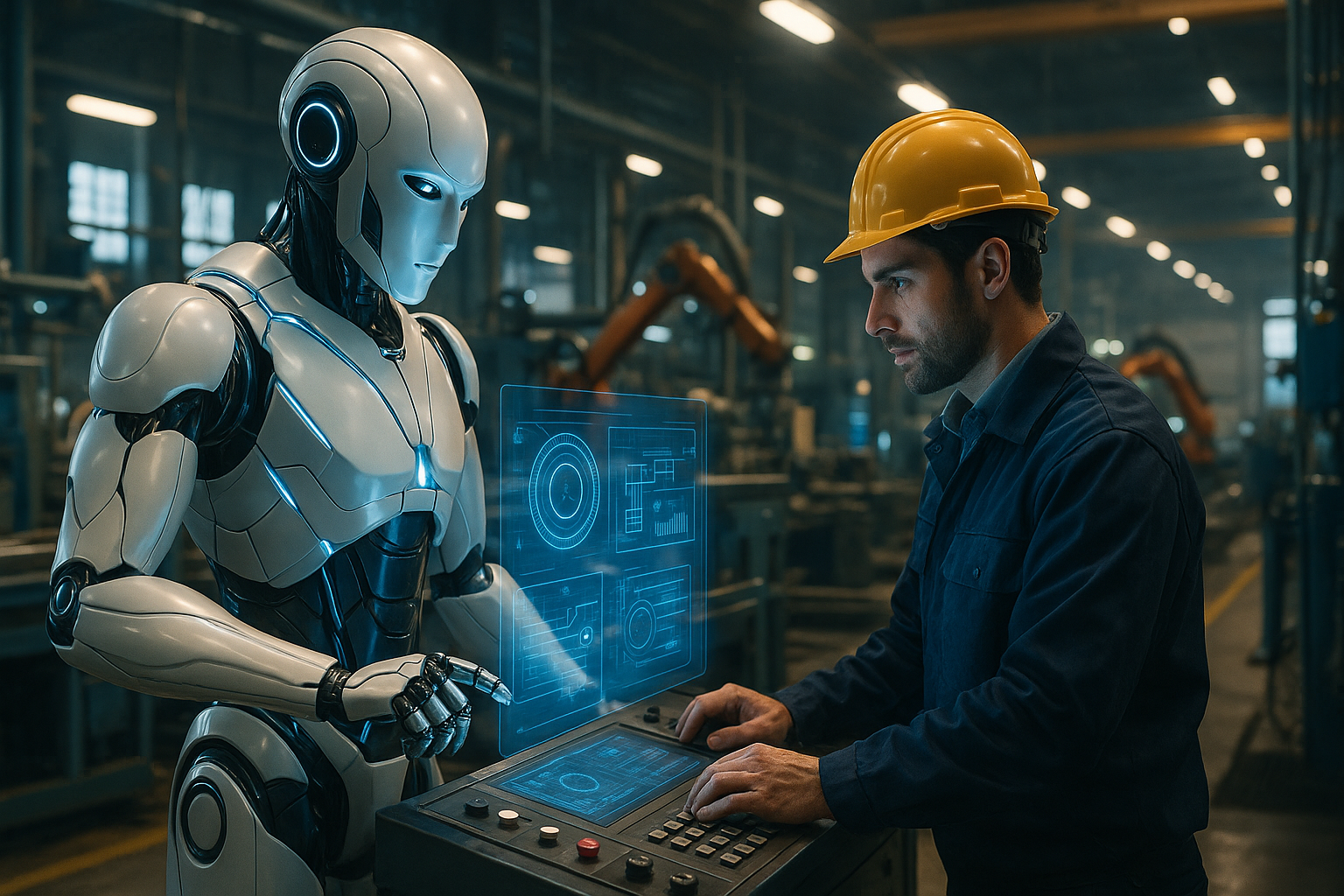
The year 2025 marks a significant milestone in the robotics revolution, particularly with the rise of humanoid robots transforming industries worldwide. Unlike traditional industrial robots—often fixed in place and designed for repetitive tasks—humanoid robots mimic human form and function, enabling unprecedented versatility on the factory floor, in healthcare, logistics, and even customer service. This evolution is not merely technological but also cultural, reshaping how companies approach automation and human-robot collaboration.
Companies like Boston Dynamics and Hanson Robotics have spearheaded this movement. Boston Dynamics’ Atlas robot, first introduced in 2013, has undergone continuous iterations, reaching new heights in mobility and dexterity by 2025. Meanwhile, Hanson Robotics’ Sophia has transitioned from a novelty AI chatbot into a practical humanoid assistant deployed in hospitality and healthcare environments. These advancements highlight how humanoid robots are moving beyond prototypes into everyday industrial applications.
Manufacturing has long been the poster child for automation, but humanoid robots are redefining what is possible. In automotive plants, companies like Tesla and Toyota now employ humanoid robots alongside human workers to handle complex assembly tasks that require adaptability and fine motor skills. For instance, Tesla’s recent integration of Tesla Bot units in its Fremont factory has reportedly increased production efficiency by 15% while reducing workplace injuries related to repetitive strain.
Unlike traditional robotic arms, humanoid robots can navigate varied environments, use tools designed for humans, and adjust to last-minute assembly line changes. This flexibility allows factories to switch between different models and custom orders with less downtime, a competitive advantage in the fast-paced automotive and electronics sectors. As a result, the global industrial robotics market, valued at approximately $50 billion in 2023, is projected to grow by 12% annually, fueled largely by humanoid robot adoption.
Humanoid robots have become indispensable in healthcare settings, particularly in eldercare and rehabilitation. South Korea’s Samsung Electronics introduced the CareBot in early 2024, a humanoid robot designed to assist elderly patients with daily activities and monitor vital signs. By 2025, over 1,000 hospitals and nursing homes across Asia and Europe have adopted such robots, easing the burden on healthcare professionals facing staff shortages.
In surgical theaters, robots like the Medtronic Hugo system combine humanoid interfaces with robotic precision, assisting surgeons during minimally invasive procedures. These robots can adjust in real time to patient movement and provide haptic feedback, enhancing surgical outcomes. The integration of humanoid robots in healthcare translates into reduced recovery times, fewer complications, and increased accessibility to medical services in rural and underserved areas.
The logistics sector, driven by e-commerce giants such as Amazon and Alibaba, has embraced humanoid robots to optimize warehouse operations. Amazon’s recent deployment of “Proteus” humanoid robots in its Phoenix fulfillment center has improved order picking accuracy by 20% and reduced processing times by nearly 30%. These robots can navigate crowded warehouse aisles, handle fragile items gently, and collaborate seamlessly with human workers.
Humanoid robots’ ability to understand and adapt to complex, dynamic environments addresses limitations faced by traditional wheeled robots. Their anthropomorphic design allows them to use standard equipment and tools designed for humans without extensive retrofitting. As the volume of global e-commerce surpasses $6 trillion in 2025, humanoid robotics are critical in meeting the demand for faster, more reliable delivery services.
Humanoid robots have also found a niche in customer-facing roles, transforming retail, hospitality, and banking sectors. In 2025, Hilton Hotels introduced “Connie 2.0,” an upgraded humanoid concierge robot capable of multilingual communication, facial recognition, and personalized guest assistance. Connie 2.0 has improved guest satisfaction scores by 18% in pilot locations, demonstrating the potential for robots to complement human staff without replacing the personal touch.
Retailers like Walmart and Sephora deploy humanoid robots to guide customers, manage inventory, and even provide product demonstrations. These robots integrate advanced AI-driven emotional recognition to respond empathetically, making interactions feel natural and engaging. This trend reflects a broader shift toward service automation that enhances rather than diminishes customer experience.
Educational institutions increasingly utilize humanoid robots to support personalized learning and skills training. The University of Tokyo’s “Pepper” robot, originally introduced in 2014, has evolved into an interactive tutor used in classrooms across Japan and Europe. By 2025, Pepper assists in teaching STEM subjects, languages, and social skills, adapting lessons based on student responses and engagement levels.
In corporate training, companies like Siemens and Boeing incorporate humanoid robots to simulate real-world scenarios, from assembly line troubleshooting to emergency response drills. These immersive experiences improve retention and worker preparedness. The use of robots in education and training heralds a future where human-robot collaboration extends beyond physical labor into cognitive and social domains.
Despite their promise, humanoid robots face significant challenges. Ethical concerns about job displacement remain prevalent, with studies from the Brookings Institution estimating that up to 25 million manufacturing jobs worldwide could be affected by 2030. Companies like SoftBank Robotics emphasize responsible deployment strategies that focus on augmentation rather than replacement.
Technically, achieving human-like dexterity, perception, and decision-making requires massive computational power and sophisticated AI algorithms. Energy consumption and battery life also limit robot endurance in industrial settings. Furthermore, privacy issues emerge as humanoid robots collect and process sensitive data during interactions. Addressing these challenges is crucial for sustainable integration of humanoid robots in society.
The economic footprint of humanoid robotics is expanding rapidly. According to the International Federation of Robotics (IFR), the global market for humanoid robots reached $12 billion in 2024 and is projected to surpass $25 billion by 2030. Investment flows have surged, with venture capital funding hitting $1.8 billion in 2023 alone, led by startups like Agility Robotics and Engineered Arts.
Countries investing heavily in humanoid robotics technology—such as Japan, South Korea, Germany, and the United States—are positioned to lead the next wave of industrial innovation. Governments are also crafting regulatory frameworks and funding research initiatives to accelerate development while safeguarding public interests. This dynamic ecosystem signals a profound transformation in the global economy driven by humanoid robots.
Looking ahead, the integration of humanoid robots into industries is expected to deepen, fostering a symbiotic relationship between humans and machines. Advances in AI, machine learning, and sensor technologies will enable robots to anticipate human needs, collaborate more intuitively, and perform increasingly complex tasks. Companies like NVIDIA and OpenAI are at the forefront, developing AI models that enhance robotic perception and decision-making.
Moreover, the rise of humanoid robots will spur new job categories focused on robot maintenance, programming, and ethical oversight. Education systems are already adapting curricula to prepare the workforce for this hybrid future. Ultimately, humanoid robots in 2025 are not just tools but partners, augmenting human capabilities and reshaping industries for greater productivity and innovation.
The robotics revolution of 2025 underscores a pivotal shift from mechanized automation to intelligent, adaptable humanoid robots transforming multiple industries. From manufacturing floors to hospital wards, logistics hubs to customer service counters, these robots enhance efficiency, safety, and interaction quality. While challenges related to ethics, economics, and technology remain, ongoing innovation and responsible deployment promise a future where humans and humanoid robots collaborate seamlessly.
As companies continue to invest billions in research and integration, the global economy braces for profound changes in workforce dynamics and productivity paradigms. The story of humanoid robots is one of human ingenuity creating new possibilities—pushing the boundaries of what machines can do and how they enrich human lives. In 2025 and beyond, the robotics revolution is not just about automation; it’s about partnership and progress.