Information Geometry Trade - December 27, 2025
Daily update on the Information Geometry investment thesis. Slight weakness with the portfolio declining 0.09%. GOOGL led with a +0.14% move, while AAPL lagged ...
Tech
Jan 6
The human exoskeleton industry is undergoing a remarkable expansion, driven by technological advances and multi-sector applications. Market size estimates for 2024 range from $498 million to $551 million, as reported by Grand View Research and Spherical Insights, respectively. By 2025, projections widen to $560 million–$850 million, according to MarketsandMarkets and ABI Research, illustrating the growing confidence in adoption and innovation. Looking further ahead, the market is forecasted to reach between $1.25 billion and $2.2 billion by 2030, with a compound annual growth rate (CAGR) generally estimated between 19% and 21%, though some sources note a broader range of 16% to 30%. Future Market Insights anticipates a dramatic surge to $19.7 billion by 2035, fueled by a sustained 30% CAGR.
This explosive growth is propelled by the convergence of medical, industrial, consumer, and military interests, each seeking to leverage powered exoskeleton technology to augment human performance, reduce injury, and enhance quality of life. As the technology matures and manufacturing scales, cost reductions and increased accessibility are expected to further stimulate adoption worldwide.
Medical and rehabilitation applications remain the largest and most dynamic segment within the exoskeleton market. The rehabilitation exoskeleton market exhibited a robust annual growth rate of 38.4% between 2019 and 2023, reaching a market value of $301 million in 2023 alone. These systems primarily assist patients recovering from stroke, spinal cord injuries, and other neuromuscular impairments by enabling improved gait and mobility.
Premium medical devices command prices between $85,000 and $200,000. For instance, Ekso Bionics' EksoNR, priced between $85,000 and $120,000, incorporates AI-driven gait adjustment and a 4-hour battery life, with FDA clearance restricting its use to clinical environments. Similarly, CYBERDYNE's HAL exoskeleton, costing $150,000 to $200,000, utilizes brain-signal detection technology but remains research-only and lacks FDA clearance.
Mid-tier devices, ranging from $70,000 to $90,000, include ReWalk Robotics' ReWalk Personal system, which offers a carbon fiber frame, 6-hour battery life, and FDA clearance for personal use. Parker's Indego is similarly priced at approximately $80,000. Budget medical exoskeletons such as suitX Phoenix ($40,000-$55,000) and Fourier Intelligence's X2 ($35,000-$50,000) offer modular designs and features like AI gait training, though the latter is CE marked and not FDA cleared.
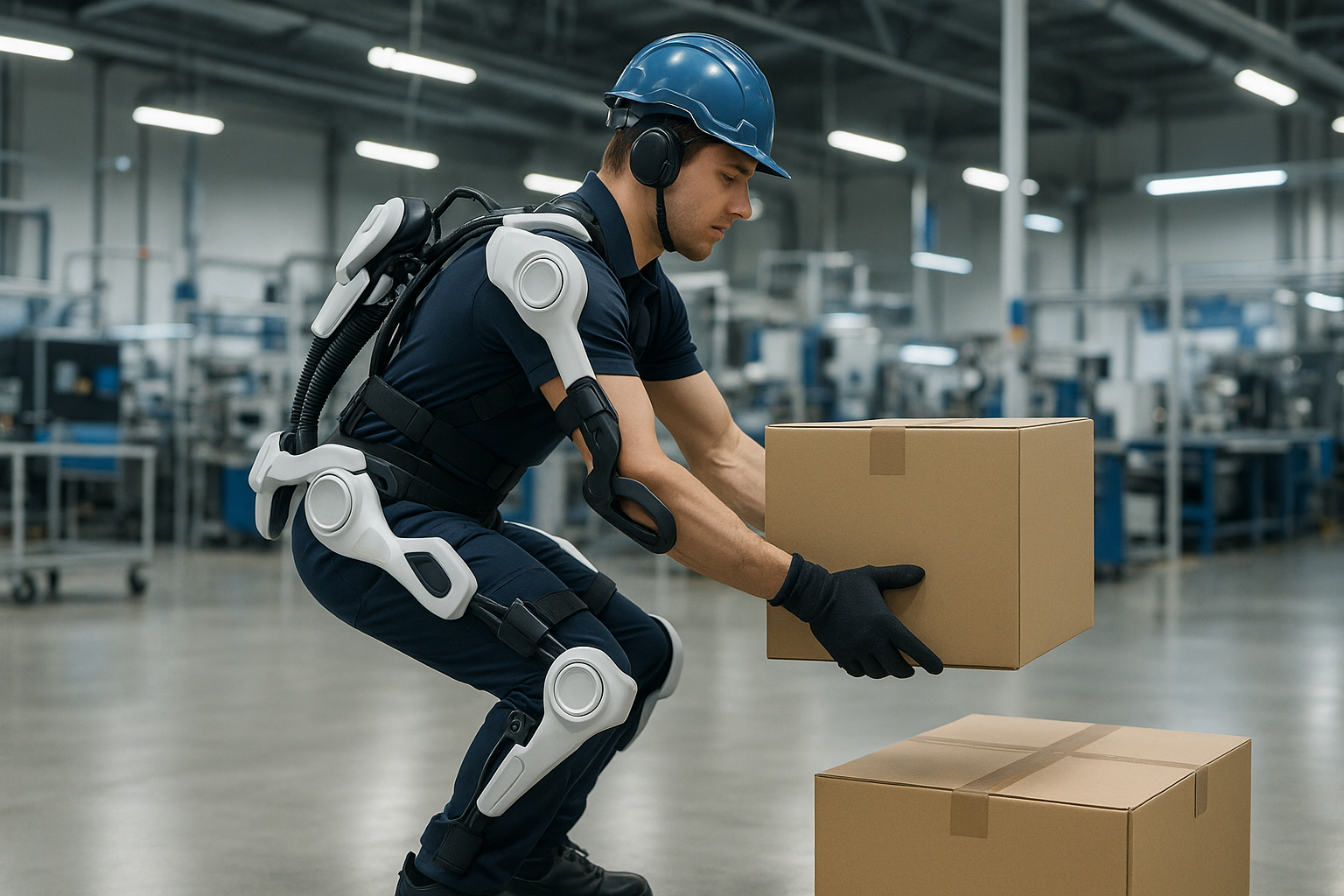
Industrial exoskeletons are designed to reduce musculoskeletal disorders (WMSDs) by supporting heavy lifting, overhead work, and repetitive motions in manufacturing, construction, and logistics. In 2018, approximately 7,000 units were sold in manufacturing sectors, representing about 12% penetration of a potential 60,000-unit market. This market is underscored by a concerning 21.13% incidence rate of WMSDs among workers, highlighting the critical need for ergonomic solutions.
Pricing in this segment is markedly more accessible than medical counterparts, with SuitX's BackX and LegX exoskeletons priced at $4,000 and $5,000 respectively in 2018. German Bionic's Exia, launched in May 2025 with AI-powered assistance capable of supporting up to 84 lbs, has yet to disclose pricing but represents next-generation industrial solutions. The overhead work market alone is valued at $1.12 billion in 2024, signaling substantial opportunity for industrial exoskeleton integration.
Consumer and recreational exoskeletons are an emergent segment, driven by demand for enhanced mobility and endurance in outdoor activities. Hypershell, founded in 2021, has been a notable disruptor with mass production commencing in 2024. Their Hypershell GO X, retailing at $999, won the CES 2025 Best of Innovation award and targets outdoor and hiking enthusiasts. The Hypershell Carbon X, priced at $1,799, offers a more advanced platform.
Arc'teryx's MO/GO integrated exoskeleton pants, at $5,000, illustrate the blend of apparel and powered assistance. Honda's Walking Assist device, available for a rental fee of $375 per month, further expands consumer access. These products emphasize portability, ease of use, and affordability relative to medical-grade exoskeletons, broadening the market to active consumers and fitness enthusiasts.
Technological sophistication underpins the industry's rapid evolution. AI-enabled adaptive gait algorithms enable exoskeletons to customize assistance to individual biomechanical patterns, enhancing rehabilitation outcomes and user comfort. Ekso Bionics' EksoNR exemplifies this with AI gait adjustment capabilities.
Brain-signal detection technology, as utilized by CYBERDYNE's HAL system, represents a frontier in user-machine interfacing, allowing the exoskeleton to interpret neural commands directly. Although currently research-focused and lacking FDA clearance, such innovations portend future systems that seamlessly integrate with users' intent.
In industrial applications, AI-powered load support and motion prediction, as seen in German Bionic's Exia, improve ergonomics and reduce fatigue. Battery life advancements, modular designs, and lightweight carbon fiber materials also contribute to enhanced usability across sectors.
Adoption rates vary significantly by application and geography. Rehabilitation centers in the USA demonstrate a 52% adoption rate of exoskeleton technology, reflecting strong clinical uptake. North America accounts for 39% of the global market, underscoring regional leadership in technology deployment.
In industrial sectors, penetration remains limited at approximately 12% of the potential market, constrained by cost, awareness, and integration challenges. Healthcare and nursing sectors increasingly deploy exoskeletons to reduce physical strain during patient handling, supported by positive clinical safety evidence.
Consumer adoption is nascent but growing rapidly, particularly in outdoor and recreational markets, fueled by more affordable offerings and lifestyle integration.
The exoskeleton market is stratified into distinct pricing tiers that reflect functionality, target users, and regulatory approvals. Premium medical devices range from $85,000 to $200,000, targeting clinical rehabilitation with advanced features such as AI and brain-computer interfaces. Mid-tier medical exoskeletons, priced between $70,000 and $90,000, provide personal mobility solutions with FDA clearance for at-home use.
Budget medical exoskeletons, such as suitX's Phoenix and Fourier Intelligence's X2, offer lower-cost alternatives ($35,000–$55,000) with modular, lightweight designs, increasing accessibility for rehabilitation centers with constrained budgets. Consumer and industrial exoskeletons dramatically reduce price barriers, with products like Hypershell GO X at under $1,000 and industrial models such as SuitX's BackX priced around $4,000.
Rental models, exemplified by Honda's Walking Assist at $375 per month, further democratize access by lowering upfront investment, especially for personal mobility enhancement.
Robust clinical evidence undergirds the medical exoskeleton sector, particularly in rehabilitation. Randomized controlled trials demonstrate that powered exoskeletons effectively improve walking independence in patients with spinal cord injury, stroke, and other neurological conditions. Positive outcomes include enhanced gait symmetry, increased endurance, and improved neuroplasticity.
Healthcare and nursing applications benefit from exoskeletons that reduce physical strain during patient handling, thereby lowering injury risk among caregivers. Clinical studies confirm the safety and ergonomic efficacy of these devices, contributing to wider institutional adoption.
While research on consumer and industrial exoskeletons is less extensive, initial studies indicate reductions in fatigue and musculoskeletal disorders, supporting broader workplace implementation.
Military exoskeleton programs have historically encountered significant challenges. The TALOS program, a high-profile initiative to develop an advanced tactical exoskeleton, was cancelled in February 2019 after failing to meet performance and integration goals. Earlier efforts such as Lockheed Martin's ONYX (tested in 2018) and the HULC system (late 2000s) also failed to achieve operational deployment.
By contrast, civilian applications have experienced notable successes, with a diversified ecosystem of companies producing clinically validated rehabilitation devices, affordable industrial solutions, and emerging consumer products. The civilian sector benefits from clearer use cases, regulatory pathways, and immediate market demand, facilitating more sustainable commercialization.
Looking forward, the human exoskeleton industry is poised for transformative growth. Market forecasts anticipate reaching $1.25 billion to $2.2 billion by 2030, with Future Market Insights projecting an astonishing $19.7 billion valuation by 2035, supported by a 30% CAGR. Advances in AI, battery technology, materials science, and neural interfacing will drive product innovation and broaden applications.
Geographically, North America is expected to maintain leadership, though Asia-Pacific and Europe are rapidly expanding their footprints. Industrial adoption will accelerate as ergonomic standards tighten and labor shortages intensify. Medical applications will expand with increased insurance coverage and clinical validation, while consumer markets will evolve as affordability improves.
In sum, the exoskeleton industry is entering a new phase characterized by scalability, diversification, and integration into daily life, promising to significantly augment human capability across sectors.
The human exoskeleton industry exemplifies the convergence of cutting-edge technology and human-centered design, unlocking unprecedented opportunities to enhance mobility, productivity, and safety. From premium medical devices facilitating rehabilitation to industrial exoskeletons mitigating workplace injuries and consumer models empowering outdoor enthusiasts, powered suits are redefining human capability.
Despite early setbacks in military domains, civilian sectors have demonstrated robust growth, underpinned by validated clinical outcomes, diversified product portfolios, and expanding market penetration. Pricing stratification and innovative business models improve accessibility, while AI and neural interfacing represent the vanguard of future innovation.
As the industry approaches the 2030s, sustained investment, cross-sector collaboration, and regulatory maturation will be critical to realizing the full potential of exoskeleton technology. The projected surge to nearly $20 billion by 2035 underscores the transformative impact exoskeletons will have on human health, labor, and lifestyle worldwide.